|
NATIONAL CRISIS |
SOCIAL
JUSTICE |
SHARED
HUMANITY | REAL
PATRIOTISM
CHURCH
AND STATE | POPULAR
CULTURE | LIFE LESSONS
"This is
the true joy in life, to be used for a purpose
recognized by yourself as a mighty one. I am of the
opinion that my life belongs to the whole community, and
as I live it is my privilege to do for it whatever I
can. I want to be thoroughly used up when I die, for the
harder I work, the more I love. I rejoice in life for
its own sake. Life is no brief candle to me. It is a
sort of splendid torch, which I've got a hold of for the
moment. And I want to make it burn as brightly as
possible before handing it on to future generations."
-George Bernard Shaw
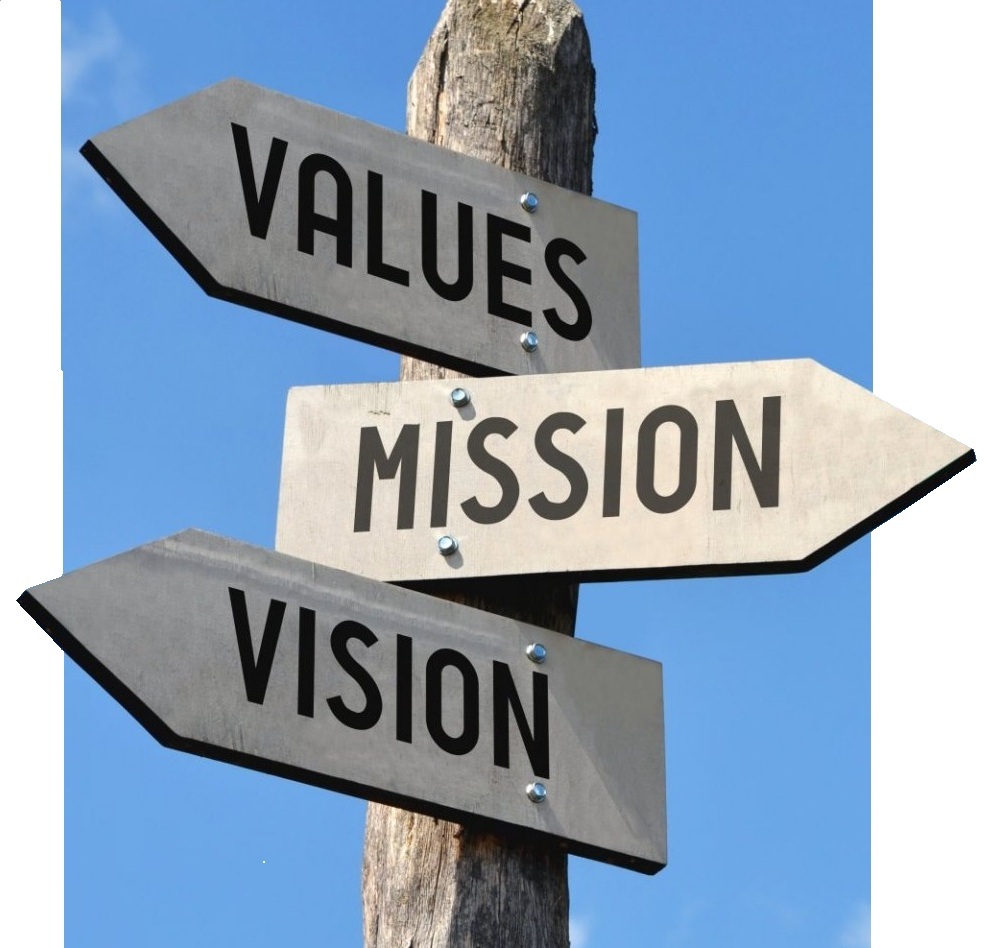
Purpose, Vision, Direction
Essential Compass
Discovering your purpose and meaning in life is a deeply
transformative journey. It serves as an essential
compass, anchoring individuals through trials and
illuminating their path forward. When people connect
with a deeper sense of mission, they experience enhanced
psychological well-being, greater emotional resilience,
and a profound decrease in feelings of existential
emptiness.
It is
about having a sense of direction, a vision, a purpose,
guiding values. It draws attention to the importance of
alignment, balance, service, meaningful work and the
concept of a calling. It stirs up notions of happiness,
success, and greatness.
This vital
realization transforms daily routines into intentional
actions, fueling intrinsic motivation and inspiring
personal growth. Ultimately, uncovering your purpose
does not just make life more fulfilling; it aligns your
unique talents with the world around you, creating a
lasting legacy of impact and genuine happiness.

Jeff Goldblum: George Bernard Shaw
Jane Goodall: Final Message to the World
Happy People Dancing
Around the World
Stevie Sings "Maybe This Time" on Schitt’s
Creek
If
I Could Tell You by W.H. Auden
I Want to See You Be Brave
The Meaning of Life
What's it all about?
"Life
isn't about finding yourself. Life is about creating
yourself."
-George Bernard Shaw
"The
meaning of life is whatever you ascribe it to be. Being
alive is the meaning.”
-Joseph Campbell
The sole meaning of life is to serve humanity.
-Leo Tolstoy
Challenging the meaning of life is the truest expression
of the state of being human.
-Viktor E. Frankl
“The true meaning of life is to plant trees, under whose
shade you do not expect to sit.”
-Nelson
Henderson
“I feel the capacity to care is the thing which gives
life its deepest significance.”
-Pablo Casals
“The ultimate aim of the human mind, in all its efforts,
is to become acquainted with truth.”
-Eliza Farnham

Sara Bareilles - She Used To Be Mine
Astronaut Christina Koch: We Are a Crew
True Colors by Cyndi Lauper
4 Non Blondes - What's Going On
Train Passengers Sing Somewhere Over the
Rainbow
Do You Hear the People Singing
"To laugh
often and love much.
To win respect of intelligent people and the affection
of children.
To earn the approbation of honest critics and endure the
betrayal of false friends.
To appreciate beauty, to find the best in others, to
give one’s self.
To leave the world a little better, whether by a healthy
child, a garden patch, or a redeemed social condition.
To have played and laughed with enthusiasm and sung with
exultation.
To know even one life has breathed easier because you
have lived…
This is to have succeeded."
-Ralph Waldo Emerson
“The
purpose of life is not to be happy. It is to be useful,
to be honorable, to be compassionate, to have it make
some difference that you have lived and lived well.”
-Ralph
Waldo Emerson
"There's
no happy ending. Be open to experience, be willing to
try new things, don't have a rigid plan, accept random
acts of hospitality without judgement or fear. Don't be
afraid to wander. Don't be afraid to risk a bad
experience or you'll never get the magical one. Be
humble, be grateful. And, most importantly, move. Move
as far as you can, as much as you can, across the ocean
or simply across the river. The extent to which you can
walk in somebody else's shoes is a plus for everybody.
Open your mind, get up off the couch. Move."
-Anthony
Bourdain
"Life
means to have something definite to do, a mission to
fulfill. And in the measure in which we avoid setting
our life to something, we make it empty. Human life, by
its very nature, has to be dedicated to something."
-Jose Ortega y Gasset

"Fall in love with some activity, and do it! Nobody ever
figures out what life is all about, and it doesn't
matter. Explore the world. Nearly everything is really
interesting if you go into it deeply enough. Work as
hard and as much as you want to on the things you like
to do the best. Don't think about what you want to be,
but what you want to do. Keep up some kind of a minimum
with other things so that society doesn't stop you from
doing anything at all."
-Richard
Feynman
“Appreciate the arts. Engage with the arts. They are a
very human way of making life more bearable. Practicing
an art, no matter how well or badly, is a way to make
your soul grow, for heaven’s sake. Sing in the shower.
Dance to the radio. Tell stories. Write a poem to a
friend, even a lousy poem. Do it as well as you possibly
can. You will get an enormous reward. You will have
created something.”
-Kurt Vonnegut
“The
purpose of life is to live it, to taste experience to
the utmost, to reach out eagerly and without fear for
newer and richer experience.”
-Eleanor
Roosevelt
"The
adventure of life is to learn
The purpose of life is to grow
The nature of life is to change
The challenge of life is to overcome
The essence of life is to care
The opportunity of life is to serve
The secret of life is to dare
The beauty of life is to give"
-William
Arthur Ward
Cup of Zen
Ken Robinson: How to Find Your Passion
Denzel Washington: Fall Forward, Dream Big, Take
Chances, Change Your Life
Testing Your Beliefs
Tim Minchin: Live to Learn
Baz Luhrmann: Everybody's Free (To Wear Sunscreen)
The
Balanced Life
Becoming a Well-Rounded Person
Stephen
Covey, the author of "Seven Habits of Highly Effective
People" offered a model for living a balanced life. He
suggested that the activities and priorities of our life
could be organized into four quadrants or dimensions.
To achieve
balance in your life, to be a whole or complete human,
requires being well-rounded and tending to the various
aspects of your lifestyle. To be well-rounded is to
recognize the various dimensions of your personal
development. Human beings are multi-dimensional
creatures. We can refer to these dimensions as body,
mind, heart, and soul. Or perhaps as physical, mental,
emotional, and spiritual.
The growth of effective individuals occurs in a variety
of different areas and in a variety of different ways.
Well-rounded individuals seek to develop all aspects of
their personality, and endeavor to grow and mature in
each dimension. To be successful, you must have a broad
perspective on life that comes from an array of
experiences.
Jeff Goldblum: George Bernard Shaw
Jane Goodall: Final Message to the World
Benefits of Being a Lifelong Learner
Honoring Difference: You Are a Masterpiece
Why Education is Important
Seven Habits of Highly Effective People
This is What Respect Looks Like
Happy People Dancing
Around the World
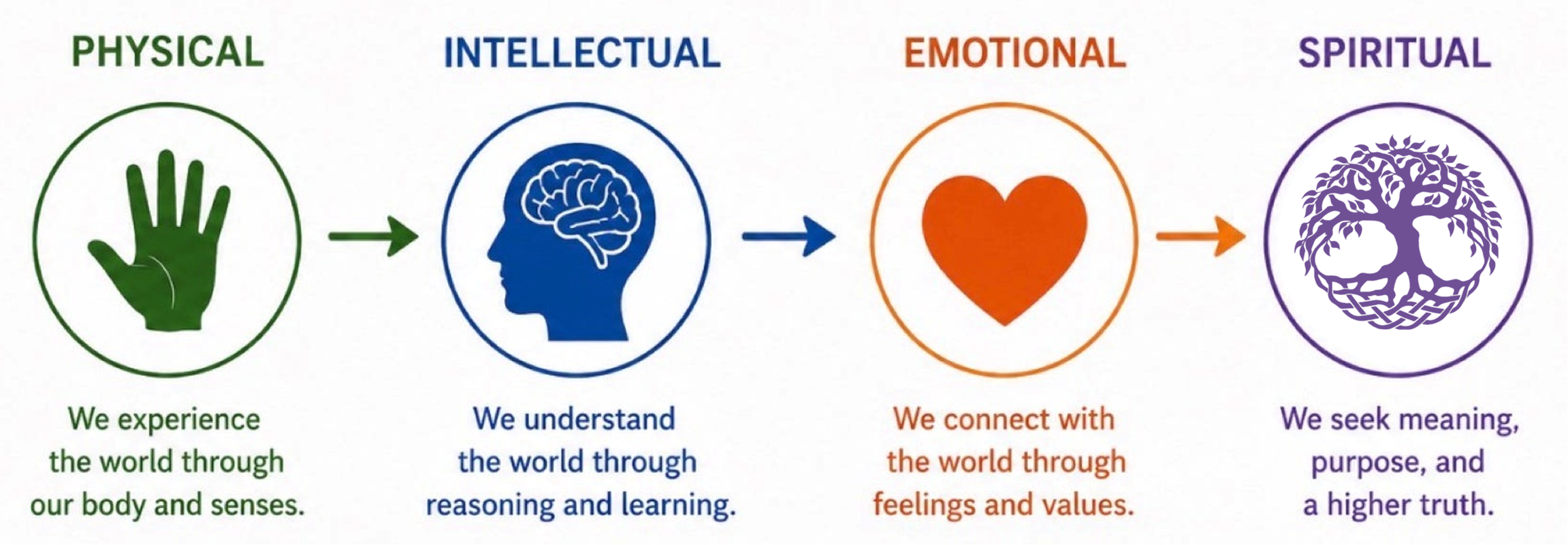
BODY
The
Need To Live...
Our physical need for food, clothing, shelter, economic
well-being, and health.
MIND
The
Need To Learn...
Our intellectual or mental need to develop and to grow.
HEART
The
Need To Love...
Our social and emotional need to relate to other people,
to belong, to love and be loved.
SOUL
The Need To Leave a Legacy...
Our spiritual need to have a sense of meaning, purpose,
personal congruence, and contribution.
Everybody Wants to Be Loved by Ingrid Michaelson
Stephen R Covey - Quotes
Lady Gaga: Beautiful Day in the
Neighborhood
This is What Respect Looks Like
Education: Why it Matters
Broadway Kids Against Bullying: I Have a
Voice
Importance of Education: Shaping the Future
"Tell me,
what is it you plan to do with your one wild and
precious life?"
-Mary Oliver
"Plan
your hours to be productive. Plan your weeks to be
educational. Plan your years to be purposeful. Plan your
life to be an experience of growth."
-Iyanla
Vanzant
“You were
put on this earth to achieve your greatest self, to live
out your purpose, and to do it courageously.”
-Steve
Maraboli
“The
mystery of human existence lies not in just staying
alive, but in finding something to live for.”
-Fyodor Dostoyevsky

The
Dimensions of Our Life
PHYSICAL
The physical part of a person's life centers on the
fitness of the body and the attainment of material
possessions. It emphasizes recreational activity, proper
diet, muscular development, physiological health,
financial security, and the creation of resources as the
means of becoming a better person. Development in this
area involves regular exercise, proper nutrition,
adequate rest, economic thrift, and principles of
industry.
INTELLECTUAL
The intellectual or mental dimension of an individual's
personal growth centers on educational, academic or
creative matters. The broadening of a person's mind, the
sharpening of mental awarenesses, an openness to ideas
that challenge one's thinking, and attention to
continuous learning are the traits of an effective
individual. Growth in this area involves reading and
researching in an effort to be an informed and updated
individual.
EMOTIONAL
The emotional or social aspect of a person's development
is concerned with a conscious awareness of one's own
feelings and a genuine sensitivity to the feelings of
others. It is concerned with effective interpersonal
communication and positive social interaction. An
individual's maturity in this area is characterized by
showing respect for other people, fostering meaningful
relationships, building positive self-esteem, and
enjoying satisfying life experiences. Maturity in this
area involves principles of trust, responsibility, and
commitment.
SPIRITUAL
The spiritual realm of one's life concerns itself with
the ongoing search for meaning and truth and developing
a clear sense of direction and purpose. Pondering
philosophical questions, wrestling with ethical
dilemmas, addressing moral issues, providing service to
one's community, and clarifying and expressing one's own
values and beliefs are all part of spiritual maturity.
Renewal in this area might involve meditation, prayer,
altruistic service, studying the wisdom of sacred
literature, and ultimately living for something higher
than self.
Cup of Zen
Ken Robinson: How to Find Your Passion
Denzel Washington: Fall Forward, Dream Big, Take
Chances, Change Your Life
Testing Your Beliefs
Tim Minchin: Live to Learn
Baz Luhrmann: Everybody's Free (To Wear Sunscreen)
Steve Cuss: Reactivity and Anxiety
"The real journey of discovery consists not in going new
places, but in having new eyes."
-Marcel Proust
"We make a living by what we get, but we make a life by
what we give."
-Winston Churchill
"Far and away the best prize that life has to offer is
the chance to work hard at work worth doing."
-Theodore Roosevelt

Character-Driven Success
The
Seven Habits of Highly Effective People
Stephen
Covey's The 7 Habits of Highly Effective People is a
personal and professional development framework that
teaches lasting success through character-driven,
inside-out growth.
The habits are grouped into a progression—moving from
dependence to independence (Private Victories), then to
interdependence (Public Victories), supported by
continuous self-renewal.
Private Victories:
Independence - Focus on self-mastery and taking control
of your own life.
Habit 1:
Be Proactive — Take responsibility for your life, focus
on your circle of influence, and choose how you respond
to events rather than blaming external circumstances.
Habit 2:
Begin
with the
End in Mind — Define your core values and long-term
vision so that your daily actions align with your
ultimate destination.
Habit 3:
Put First Things First — Prioritize important,
non-urgent tasks (such as long-term planning and
relationship-building) over mere urgent distractions.

“The
purpose of life is to contribute in some way to making
things better.”
-Robert F. Kennedy
“Attitude is a choice. Happiness is a choice. Optimism
is a choice. Kindness is a choice. Giving is a choice.
Respect is a choice. Whatever choice you make makes you.
Choose wisely.”
-Roy T. Bennett
“It’s not
enough to have lived. We should be determined to live
for something.”
-Winston S. Churchill
Public
Victories:
Interdependence - Focus on teamwork, collaboration, and
communication.
Habit 4:
Think Win-Win — Seek mutual benefit in all human
interactions and approach agreements through cooperation
rather than competition.
Habit 5:
Seek First to Understand, Then to Be Understood —
Practice empathetic listening to genuinely grasp another
person's perspective before trying to push your own.
Habit 6:
Synergize — Combine diverse strengths through creative
cooperation to achieve outcomes greater than what any
individual could accomplish alone.
Continuous
Renewal:
Habit 7:
Sharpen the Saw — Preserve and enhance your greatest
asset—yourself—through balanced physical, mental,
social, and spiritual self-renewal.
Jeff Goldblum: George Bernard Shaw
Benefits of Being a Lifelong Learner
Steve Cuss: Four Spaces of Anxiety
Honoring Difference: You Are a Masterpiece
Why Education is Important
Seven Habits of Highly Effective People
This is What Respect Looks Like
Happy People Dancing
Around the World
"My
mission in life is not merely to survive, but to thrive;
and to do so with some passion, some compassion, some
humor, and some style."
-Maya Angelou
"If one advances confidently in the direction of his
dreams, and endeavors to live the life which he has
imagined, he will meet with a success unexpected in
common hours."
-Henry David Thoreau
"He who is not courageous enough to take risks will
accomplish nothing in life."
-Muhammad Ali
Balance
and Alignment
The
Yin and Yang of Life
It's not
about being in control... it's about being in
alignment...
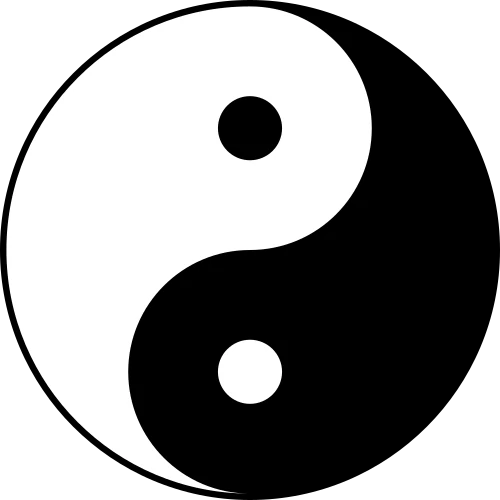
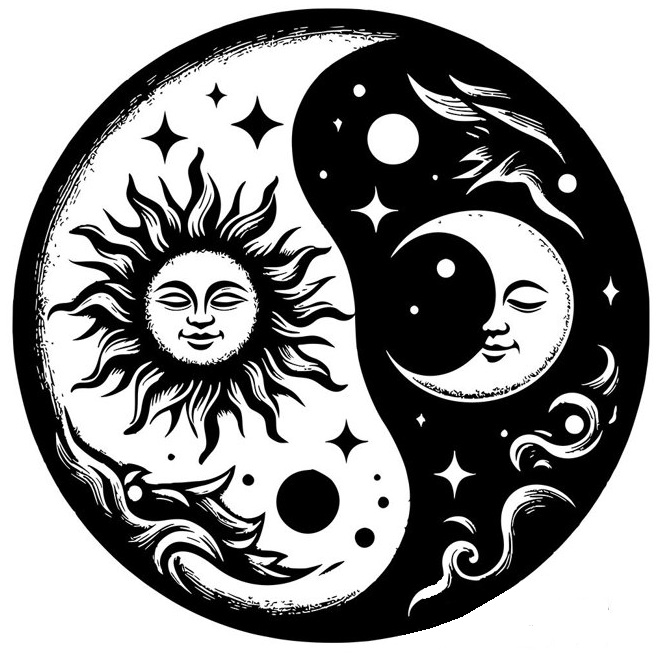
The
ancient Chinese "yin-yang" symbol, used in Chinese
medicine and Taoist philosophy, represents the dichotomy
of life, the two opposite sides of our daily experience.
Yin and yang are present in all things. Love, career,
health, exercise, diet, and life in general.
Opposing forces must be balanced the right way in order
to achieve harmony or flow. The symbol represents
completion and that duality is required to achieve
equilibrium.
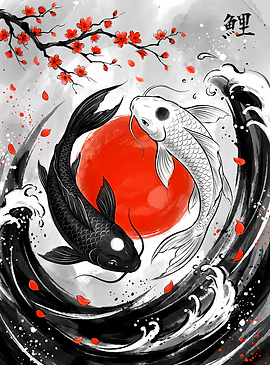
Both yin
and yang are necessary life forces. The trick is to
learn to embrace the energies of both the yin and the
yang... the dark and light... moon and sun... cold
and warm... soft and hard... female and male...
Yin and
yang describe opposite, complementary, interdependent,
and interconnected forces that make up everything in the
universe... negative and positive... sad and
happy... weak and strong...




Hidden Meanings of Yin and Yang
The Beatles: Hello, Goodbye
Deep Meaning Of Yin and Yang
Joni Mitchell: Both Sides Now
Ken Robinson: How to Find Your Passion
Understanding Yin and Yang
Yin represents the dark, passive, yielding, cold, and
receptive side. Originally, it meant the shady side of a
hill. Yang represents the bright, active, assertive,
hot, and dynamic side. Originally, it meant the sunny
side of a hill. Neither force can exist without the
other. Light needs shadow to be defined, and rest needs
activity. Opposites are complementary.
The universe is never static. Everything is in constant
flux. Ebbing and flowing. Breathing in and breathing
out. Yin and yang are phases of change, where maximum
yin turns into yang, and vice versa (like night turning
into day or winter into summer).
|
YIN
dark
shady
night
moon
winter
water
cold
soft
female
passive
still
listening
receiving
heart
 |
YANG
light
bright
day
sun
summer
fire
warm
hard
male
active
movement
speaking
giving
mind
|
"It was
the best of times. It was the worst of times."
-Charles
Dickens
"Every
action creates an equal and opposite reaction."
-Isaac
Newton
"The
optimist asked for a taste of the pessimist's wine."
-Greg Lake
"You say
yes. I say no. You say stop and I say go. You say
goodbye and I say hello.
I say
high. you say low. You say why? And I say I don't know."
-The
Beatles
"The sun
and the moon are opposing forces, but they still greet
each other, peacefully, as one awakens in the morning,
just as the other goes to sleep."
-Suzy
Kassem


Hidden Meanings of Yin and Yang
The Beatles: Hello, Goodbye
Deep Meaning Of Yin and Yang
Joni Mitchell: Both Sides Now
Ken Robinson: How to Find Your Passion
Understanding Yin and Yang
"The
greater the contrast, the greater the potential."
-Carl Jung
"You
couldn't have strength without weakness, you couldn't
have light without dark, you couldn't have love without
loss”
-Jodi Picoult
"The good
and the bad never existed in this world as standalone
features. They were always bound together."
-Tamuna
Tsertsvadze
"I've learned that the hands that made the light created
the darkness, and that no one is good without a good
measure of bad."
-Jenim
Dibie
"If we can
stay with the tension of opposites long enough —sustain
it, be true to it—we can sometimes become vessels within
which the divine opposites come together and give birth
to a new reality."
-Marie-Louise von Franz
"We are sun and moon, dear friend; we are sea and land.
It is not our purpose to become each other; it is to
recognize each other."
-Hermann
Hesse

Living as
a Whole Person
Embracing
Our Duality
Embracing the duality within our personalities is not a
flaw; it is the very foundation of psychological
resilience and completeness. Human beings are rarely a
single, flat trait. We are simultaneously strong and
vulnerable, ambitious and content, logical and deeply
emotional. Carl Jung famously termed the hidden,
unexpressed sides of our personality as the "shadow." He
argued that true psychological wholeness comes not from
hiding these contradictions, but from integrating them.
Successful
people have learned how to navigate between the two
extremes of their personality. They are able to adjust
to the people and settings they encounter and move along
their archetypal continuum... between introversion
and extroversion... between thinking and
feeling... between practical and intuitive...
between strict and spontaneous.
Ultimately, we are not either/or. We are both/and.
Accepting our duality allows us to stop performing a
curated version of ourselves and start living as a whole
person.
Recognizing our internal dualities provides essential
benefits:
--Adaptive Resilience: Being able to shift between
different modes—like switching from a fierce competitor
at work to a gentle parent at home—allows us to navigate
diverse social environments effectively.
--Deepened Empathy: When we accept that we contain both
light and dark, we become far less judgmental of the
contradictions and mistakes we see in other people.
--Fuel for Creativity: The friction between opposing
forces inside us—such as order and chaos—is often the
exact spark that drives artistic expression and
innovative problem-solving.
Hidden Meanings of Yin and Yang
The Beatles: Hello, Goodbye
Deep Meaning Of Yin and Yang
Joni Mitchell: Both Sides Now
Ken Robinson: How to Find Your Passion
Understanding Yin and Yang
"What good is the warmth of summer, without the cold of
winter to give it sweetness?"
-John
Steinbeck
"But there
is no energy unless there is a tension of opposites;
hence it is necessary to discover the opposite to the
attitude of the conscious mind."
-Carl Jung
"Being and
non-being arise together. Difficult and easy complement
each other. Long and short shape each other. High and
low tower over each other. Sound and voice harmonize
each other. Front and back follow each other."
-Lao Tse, Tao Te Ching
"In Taoist philosophy, yin, is the feminine principle,
representing the forces of earth, while yang is the
masculine principle, representing spirit."
-Marianne
Williamson
"Yin and yang, male and female, strong and weak, rigid
and tender, heaven and earth, light and darkness,
thunder and lightning, cold and warmth, good and
evil…the interplay of opposite principles constitute the
universe."
-Confucius
"Just as
discipline and freedom are opposing forces that must be
balanced, leadership requires finding the equilibrium in
the dichotomy of many seemingly contradictory qualities
between one extreme and another."
-Jocko
Willink
"Everyone
thinks that hate and love are somehow opposite forces.
They are not. They are the same force, facing opposite
directions."
-Jim
Butcher
"The sun
works the day shift; the moon, the night shift."
-Michael Bassey Johnson


Recommended Reading
Tao Te
Ching by Lao Tse
Seven Habits of Highly Effective People by Stephen Covey
The Sky's the Limit by Wayne Dyer
The Element by Ken Robinson
Modern Man in Search of a Soul by Carl Jung
The Power
of Myth
by Joseph
Campbell
Wisdom of the Ages by Wayne Dyer
The Wisdom of Insecurity by Alan Watts
The Four
Agreements by Don Miguel Ruiz
Flow by
Mihaly Csikszentmihalyi
The
Prophet by Kahlil Gibran
Both Sides
Now
"For
everything there is a season, and a time for every
matter under heaven: a time to be born and a time to
die, a time to plant and a time to uproot, a time to
kill and a time to heal, a time to tear down and a time
to build up, a time to win and a time to lose, a time to
weep and a time to laugh, a time to mourn and a time to
dance, a time to embrace and a time to refrain from
embracing, a time to keep and a time to throw away, a
time to tear and a time to mend, a time to be silent and
a time to speak, a time to love and a time to hate, a
time for war and a time for peace."
-Hebrew Bible, Ecclesiastes
Relatively
speaking you make me who I am
I need you exactly like the ocean needs the land
I need you like the sunshine needs the shadows and the
night
The rich ones need the poor ones
The blind need those with sight
Sinners need the pure of heart
Relatively speaking the contrast makes it go
Every action taken is related in the flow
Stars and losers, kings and fools go dancing hand in
hand
The sick ones need the well ones
The living need the dead
Heaven needs its hell you know
-John
Denver
"I've
looked at clouds from both sides now, from up and down,
and still somehow
It's cloud illusions I recall I really don't know clouds
at all
I've looked at love from both sides now, from give and
take, and still somehow
It's love's illusions that I recall I really don't know,
I really don't know love at all
I've looked at life from both sides now, from win and
lose and still somehow
It's life's illusions I recall I really don't know life
at all"
-Judy
Collins
"He who
creates a poison, also has the cure.
He who creates a virus, also has the antidote.
He who creates chaos, also has the ability to create
peace.
He who sparks hate, also has the ability to transform it
to love.
He who creates misery, also has the ability to destroy
it with kindness.
He who creates sadness, also has the ability to to
covert it to happiness.
He who creates darkness, can also be awakened to produce
illumination.
He who spreads fear, can also be shaken to spread
comfort.
Any problems created by the left hand of man can also be
solved with the right,
For he who manifests anything, also has the ability to
destroy it."
-Suzy Kassem
Jeff Goldblum: George Bernard Shaw
Benefits of Being a Lifelong Learner
Steve Cuss: Four Spaces of Anxiety
Honoring Difference: You Are a Masterpiece
Why Education is Important
Seven Habits of Highly Effective People
This is What Respect Looks Like
Happy People Dancing
Around the World

You Are
Enough
You are not here to shrink yourself
You will
never be enough for the wrong person. And that is not
your failure. Some people do not see you clearly. This
is not because you are lacking. It is because they are
looking at you through their own wounds.
You can give your time, your care, your heart, and still
feel unseen. You can try harder, speak softer, love
deeper, and still not be received.
But, listen gently. You are not here to shrink yourself
so someone else can feel comfortable. The wrong person
will always find something missing in you. The right
person will feel peace in your presence, even in your
silence.
Do not exhaust your soul trying to be understood by
someone who is not ready to understand. Walk away
without anger, without needing to prove anything.
Because, when you finally meet someone who sees you with
a genuine open heart, you will realize you were always
enough.
[Cup of Zen]
Sara Bareilles - She Used To Be Mine
Astronaut Christina Koch: We Are a Crew
True Colors by Cyndi Lauper
4 Non Blondes - What's Going On
Train Passengers Sing Somewhere Over the
Rainbow
Do You Hear the People Singing

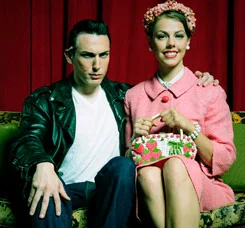
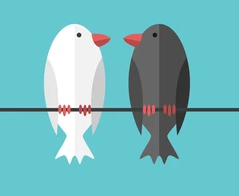
Opposites Attract
Complementary Relationships
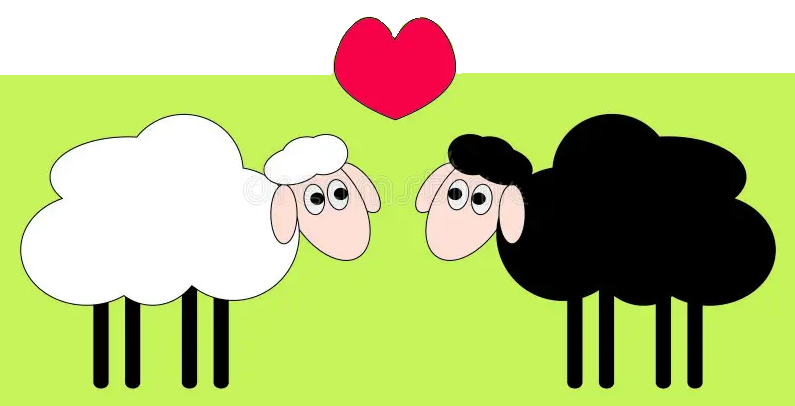
"They say
opposites attract. But you're bars and I'm books. You're
jokes and I'm shy smiles. You're melodies and I'm
lyrics. You're impulsive and I'm cautious. You're
tequila and I'm white wine. You're parties and I'm old
movies. You're my antithesis in every way. So why is
every cell in my body wishing for you to stay?""
-J.C.
"He and I
are yin and yang. He’s all sky, vast and bright and
soaring, and I’m all earth. I’m here to ground him, and
he’s here to help me fly."
-Jada
Pinkett Smith
"We are
the push and the pull, the inhale and exhale, two forces
spinning in circles, never quite colliding, never quite
parting. I am quiet storms, you are driving wind. We
chase at each other's edges, never sure if we are meant
to clash or fit. Some call it balance, others call it
madness, this endless dance of contradiction, this
harmony in discord."
-A.L.
"We
are opposites my husband and me. I like coffee and he
likes tea. He likes to cook and I like to eat. And
that's why he's thin and I'm fat. I love languages but
he loves math. He's six feet tall and I'm five feet
short. He likes to be quiet and I love to talk. I like
things cold, he likes things hot."
-Anupama

The
Good Life
Living Life to Its Fullest
"The good
life is one inspired by love and guided by knowledge."
-Bertrand Russell
"Three
grand essentials to happiness in this life are something
to do, something to love, and something to hope for."
-Joseph Addison
"May we always get what we need. May we sometimes get
what we want. May we never get what we deserve."
-Irish Toast
"I may not
have gone where I intended to go, but I think I have
ended up where I needed to be."
-Douglas Adams
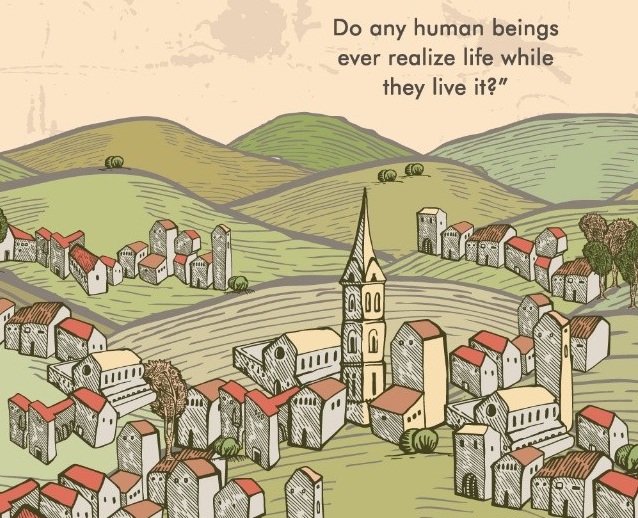
Our
Town by Thornton Wilder
Do
We Realize Life While We Live It?
Thornton
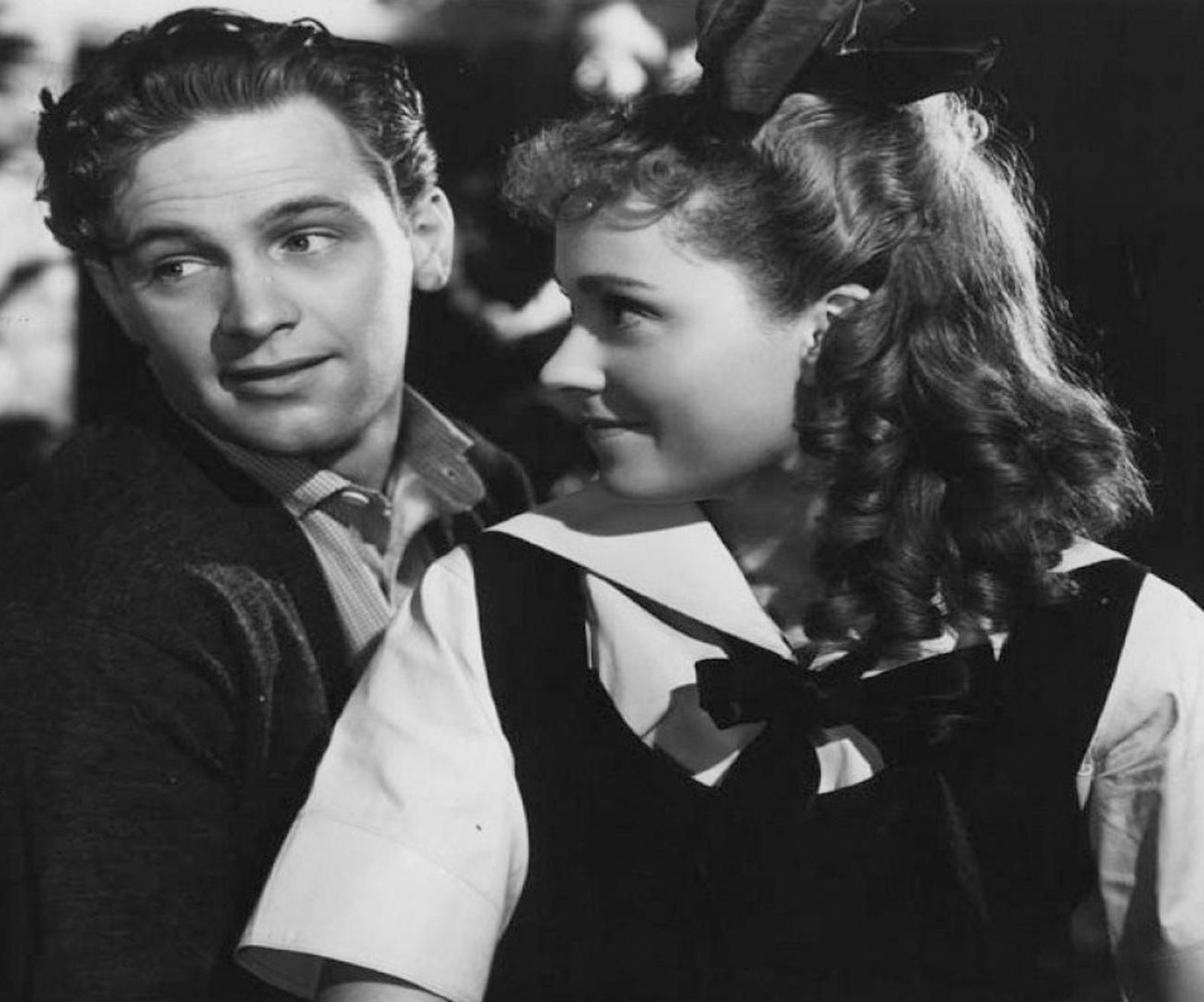
Wilder’s "Our Town" is an appropriate piece of
literature for someone seeking to learn more about
meaning and purpose in life. "Our Town" explores the
profound beauty of ordinary life, the transience of
human existence, and the importance of appreciating
every waking moment before it passes.
The Value
of the Ordinary: The play's first act focuses on
everyday routines—making breakfast, going to school, and
tending gardens. Wilder shows that true meaning is not
found only in historic events or fame, but in the simple
acts of daily life.
The
Transience of Time and Mortality: Life moves swiftly.
The structure of the play—moving from daily life to love
and marriage, and finally to death—highlights how
quickly human life cycles through generations.
Taking
Life for Granted: In Act III, a deceased Emily Webb is
given the chance to revisit a ordinary day from her past
(her twelfth birthday). She finds the experience painful
because she sees how blindly the living move through
their days, failing to realize how precious and
wonderful everyday moments are while they are
experiencing them.
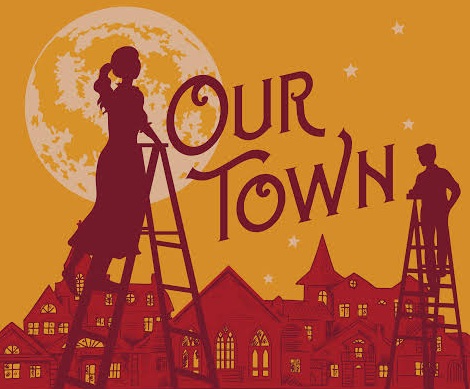
Our Town Movie: Emily Webb's Goodbye
My
So-Called Life: Our Town
Emily
says, "That’s all human beings are! Just blind people!"
In anguish, she exclaims, "Oh, earth, you're too
wonderful for anybody to realize you... Does anyone ever
realize life while they live it... every, every minute?"
Human
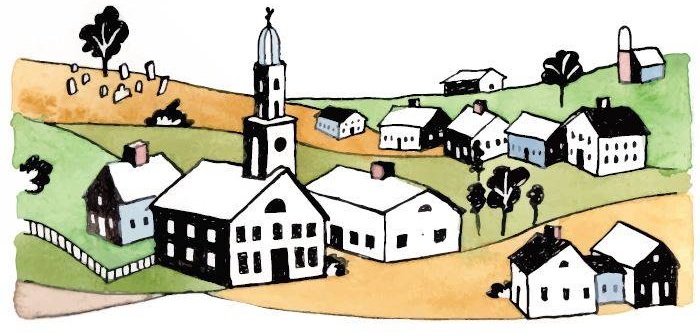
Connection and Universality: Through the small fictional
town of Grover’s Corners, Wilder illustrates a macrocosm
of the entire human experience. The joys, loves, and
griefs of the townspeople connect every audience member
to a shared, timeless humanity.
The
ultimate and underlying message of Our Town is a carpe
diem call to action: slow down and truly see, feel, and
appreciate the gift of living while you are still alive
to experience it. As Emily so painfully asks,
"Just look at me one minute as though you really saw
me."
Our Town Movie: Emily Webb's Goodbye
My
So-Called Life: Our Town
“We all
know that something is eternal. And it ain’t houses and
it ain’t names, and it ain’t earth, and it ain’t even
the stars . . . everybody knows in their bones that
something is eternal, and that something has to do with
human beings. All the greatest people ever lived have
been telling us that for five thousand years and yet
you’d be surprised how people are always losing hold of
it. There’s something way down deep that’s eternal about
every human being.”
-Thornton
Wilder, Our Town
“I want you to try and remember what it was like to have
been very young. And particularly the days when you were
first in love; when you were like a person sleepwalking,
and you didn’t quite see the street you were in, and
didn’t quite hear everything that was said to you.
You’re just a little bit crazy. Will you remember that,
please?”
-Emily
Webb to George Gibb (Our Town by Thronton Wilder)
“Yes, now you know. That's what it was to be alive. To
move about in a cloud of ignorance; to go up and down
trampling on the feelings of those...of those about you.
To spend and waste time as though you had a million
years. To be always at the mercy of one self-centered
passion, or another. Now you know — that's the happy
existence you wanted to go back to. Ignorance and
blindness.”
-Simon
Stimson (Our Town by Thronton Wilder)
"In my
little town, I grew up believing God keeps His eye on us
all
And He used to lean upon me as I pledged allegiance to
the wall
Lord I recall my little town...
Coming home after school, flying my bike past the gates
of the factories
My mom doing the laundry, hanging our shirts in the
dirty breeze
And after it rains there's a rainbow, and all of the
colors are black
It's not that the colors aren't there, it's just
imagination they lack
Everything's the same back in my little town...
Nothing but the dead and dying back in my little town
In my little town, I never meant nothing, I was just my
father's son
Saving my money, dreaming of glory, twitching like a
finger on the trigger of a gun
Nothing but the dead and dying back in my little town"
-Paul Simon, Art Garfunkel

The
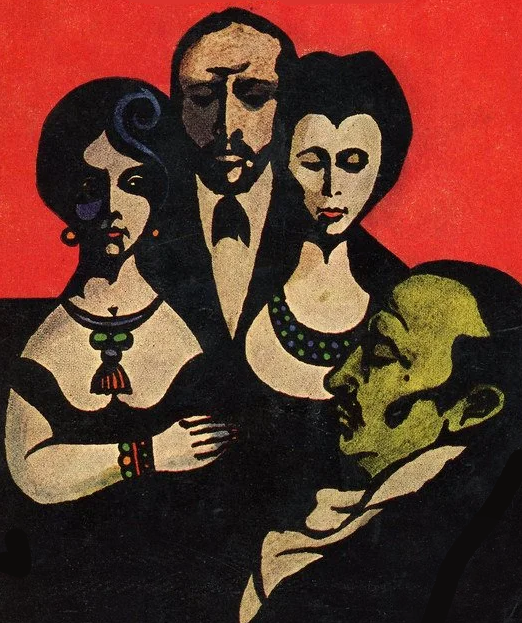
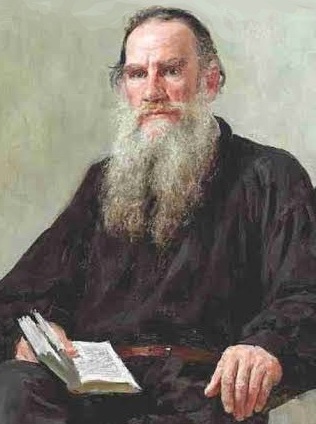
Death of Ivan Ilych by Leo Tolstoy
The Horror of Wasting Your Life
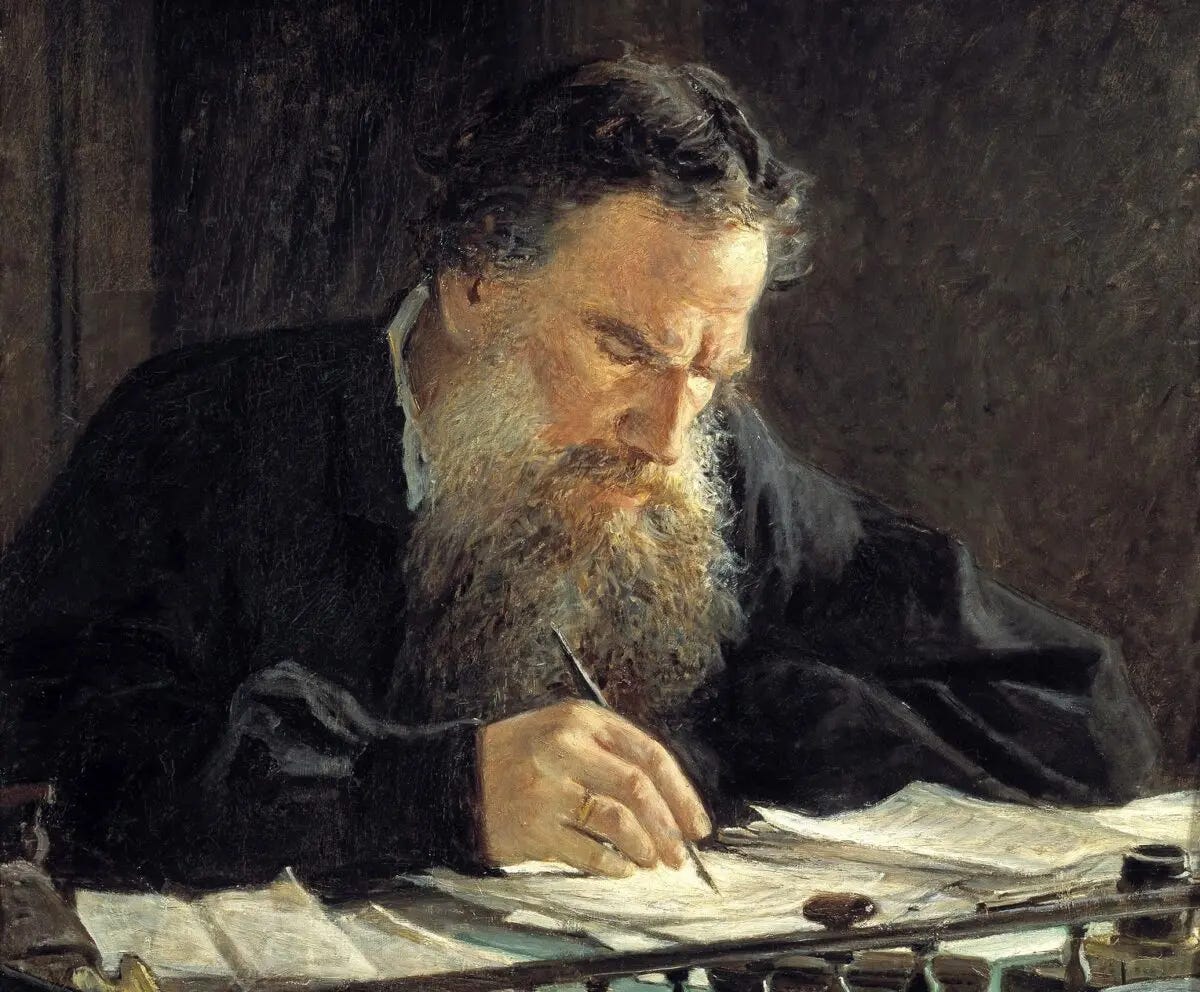
Leo
Tolstoy’s "The Death of Ivan Ilyich" follows the life of
a successful and respected judge who is diagnosed with a
terminal illness. As Ivan faces the inevitability of his
death, he is forced to confront the emptiness and
meaninglessness of his life. He questions the value of
his career, his relationships, and his pursuit of
material success.
Through
his suffering, Ivan undergoes a profound spiritual
transformation, seeking to find meaning and purpose in
his final days. The story explores the themes of
mortality, meaning, and the human condition.
It is a
profound meditation on the emptiness of a superficial
life, the transformative power of confronting mortality,
and what is means to live an authentic life. The story
is also about regret as it confronts the consequences of
living without meaning, that is, without a true and
abiding connection to one's life.
The
Emptiness of Conformity: Ivan spends his life chasing
status, fine furniture, and social prestige just to
blend in with the upper class. Tolstoy shows this
lifestyle is completely shallow and fake.
The Empty
Life of Appearances: Ivan lives a life entirely dictated
by societal expectations, career ambition, and material
comfort. He measures success by status and maintaining a "proper" image. Tolstoy
uses Ivan’s life to critique middle-class and
upper-class conformity, showing how societal norms
isolate people from genuine human connection.
Life Lessons from The Death of Ivan Ilyich
The Horror of Wasting Your Life: Tolstoy’s Death of Ivan
Ilyich
Life Lessons from The Death of Ivan Ilyich
Short Film: The Death of Ivan Ilyich
A Life
Wrongly Lived Leads to a Terrifying Death: Tolstoy's
central thesis is that a bad, superficial life leads to
a miserable, frightening death. Ivan’s physical agony is
deeply tied to his sudden, agonizing realization that he
wasted his life on trivial pursuits.
Authenticity vs. Artificiality: Ivan famously realizes
on his deathbed that his entire life was an illusion,
save for the rare moments when he lived authentically
Spiritual
Awakening through Suffering: Only when forced to face
his absolute isolation and impending death does Ivan
experience a breakthrough. In his final moments, he
moves past his anger, embraces genuine compassion, and
undergoes a spiritual rebirth. He realizes that living a
life guided by love, honesty, and kindness conquers the
terror of death.
What
happens to a man who has lived a life guided entirely by
the precepts of high society, done everything quite
correctly—by the book—achieved every worldly success and
comfort, only to discover that he’s dying and that his
life has been meaningless?
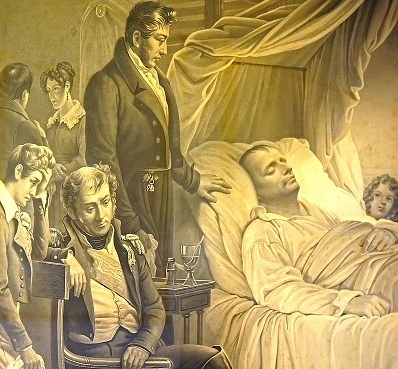
As his death approaches, the cracks in Ivan's ideal life
begin to show. The superficiality of his life starts to
wear on him as he experiences the emptiness of his
existence. “Ivan Ilyich felt for the first time not
merely boredom, but an unbearable anguish.”
The
novella argues that a bad life makes for a bad death.
Ivan suffers psychological terror not just from physical
pain, but from the realization that he lived wrongly.
Redemption and peace arrive only in his final moments
when he stops lying to himself, feels pity for his
family, and lets go of his ego. By accepting death and
embracing spiritual love over physical status, Ivan
transitions from absolute terror into a profound sense
of light and peace.


Life Lessons from The Death of Ivan Ilyich
The Horror of Wasting Your Life: Tolstoy’s Death of Ivan
Ilyich
Life Lessons from The Death of Ivan Ilyich
Short Film: The Death of Ivan Ilyich
"Ivan
Ilyich's life had been most simple and most ordinary and
therefore most terrible."
-Leo
Tolstoy, The Death of Ivan Ilyich
"Can it be
that I have not lived as one ought? But how not so, when
I've done everything as it should be done?"
-Ivan
Ilyich (Leo Tolstoy)
"It
occurred to him that what had seemed utterly
inconceivable before--that he had not lived the kind of
life he should have--might in fact be true."
-Leo
Tolstoy, The Death of Ivan Ilyich
"All that
had then seemed like joys melted away and turned into
something worthless and often vile. In public opinion I
was going uphill, and exactly to that extent life was
slipping away from under me."
-Ivan
Ilyich (Leo Tolstoy)
"It
occurred to him that he had not spent his life as he
should have done and that his scarcely perceptible
attempts to struggle against what was considered good by
the most highly placed people, those scarcely noticeable
impulses which he had immediately suppressed, might have
been the real thing, and all the rest false. And his
professional duties and the whole arrangement of his
life and of his family, and all his social and official
interests, might all have been false."
-Leo
Tolstoy, The Death of Ivan Ilyich

Spoon River Anthology by
Edgar Lee
Masters
Confessions of Lives Long Gone
In "Spoon
River Anthology," Edgar Lee Masters borrows the mouths
of the dead to give outlet to all his grudges, beliefs,
indignations, insights, glaring injustices, revelation
of life’s mysteries and paradoxes.
All in the
cast are dead, sleeping in a cemetery on a hill. From their graves
they speak their own epitaphs, discovering and
confessing the real motivations of their lives. We learn
their hidden secrets, successes, failures, and scandals.
The book addresses central themes of mortality, regret,
frustrations, failed ambitions, unfulfilled desires,
wasted potential and the pursuit of meaning. Each of the
poems in Masters' collection is an autobiographical
epitaph of a dead citizen, delivered by the dead
themselves, witnesses with profound hindsight.
Selections From Spoon River Anthology
Spoon River Anthology: A Book That Changed My Life
The Hill: Spoon River Anthology
Most of
the speakers look back with profound sorrow on choices
not made, love thwarted, dreams crushed by social
expectations, or lives wasted on trivial pursuits. They
reflect honestly on their pettiness and the choices that
led to unhappiness, missed opportunities, or unexpressed
artistic and personal desires.
There are
direct pleas from the departed to the living, urging
them to anchor their fleeting lives in important and
meaningful tasks and enduring truth rather than mundane
anxieties. Some share the sorrow of realizing that
refusing to risk anything for love or ambition is a
tragedy worse than failure itself. The reader is invited
to experience passages that are alternately revelation,
admonition, wit, wisdom, testimony, and confession.

Selections From Spoon River Anthology
Spoon River Anthology: A Book That Changed My Life
The Hill: Spoon River Anthology
"And I never started to plow in my life
That someone did not stop in the road
And take me away to a dance or picnic.
I ended up with forty acres.
I ended up with a broken fiddle.
And a broken laugh, and a thousand memories,
And not a single regret."
-Spoon
River Anthology, Edgar Lee Masters
"To this generation I would say: Memorize some bit of
verse, of truth or beauty."
-Spoon
River Anthology, Edgar Lee Masters
"It pictures not my destination, but my life. For love
was offered me and I shrank from its disillusionment.
Sorrow knocked at my door, but I was afraid.
Ambition called to me, but I dreaded the chances... Life
without meaning is the torture of restlessness and vague
desire."
-Spoon
River Anthology, Edgar Lee Masters
“To put meaning in one's life may end in madness. It is
a boat longing for the sea and yet afraid.”
-Spoon
River Anthology, Edgar Lee Masters



Tom
Lake by Ann Patchett
Appreciating Your Present Life
Ann
Patchett’s novel "Tom Lake" borrows heavily from the
themes of "Our Town." It is a moving meditation on
youthful passion, mature married love, and the complex
inner lives parents had before their children were born.
It
explores themes of love, loss, memory, and the
complexities of family relationships, particularly how
the past shapes the present. It speaks to the art of
living through art in ways that shape us and give us
insight into the true nature of love and finding your
truest self.
The Lives
of Parents Before Children: The central framework
explores how hard it is for children to imagine their
parents as separate, desiring, and flawed human beings
in their youth. As the mother recounts her past, her
adult daughters realize their mother had an entire
existence—and a passionate romance—long before they ever
came into the picture.
Youthful
Love vs Married Love: The book contrasts the
intoxicating, chaotic, and destructive nature of young
romantic infatuation (exemplified by a past fling with a
charismatic future movie star) with the quiet,
grounding, and sustaining reality of long-term married
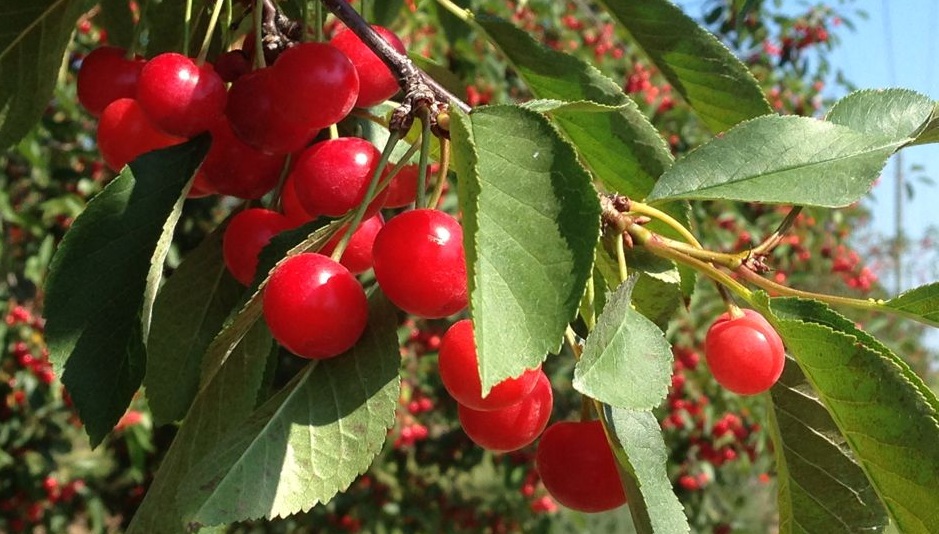
love (found in her life with her husband on the cherry
farm).


The Power
and Limits of Storytelling: Storytelling is how the
mother bonds with her daughters, but the novel shows
that narratives are always edited. She selectively
shares her history, keeping certain secrets and
omissions to herself. The book questions the clarity and
authenticity of the stories we tell ourselves and others
to make sense of our past.
The
Cyclical Nature of Life: Emotional patterns repeat
across generations. Despite a parent's best efforts to
shield their children from pain, they ultimately
navigate the same types of longing, grief, and
heartbreak that their mom faced at their age.
Appreciating the Present Moment: Heavily inspired by
Thornton Wilder’s classic play Our Town (which is
featured prominently in the novel's theater backdrop), a
core theme is about paying attention to the small,
ordinary moments of daily life and recognizing the
immense value of happiness even when the wider world is
falling apart.
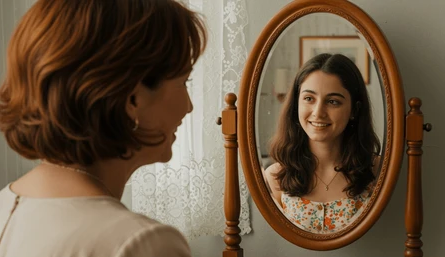

The
overarching message of Tom Lake is that peace and true
happiness are found in accepting the ordinary and
letting go of the illusions of glamour.
The mother
walked away from a potential life of Hollywood fame
because she recognized that the high-intensity spotlight
of celebrity romance is a burning illusion. Instead, she
chose the quiet, demanding, but deeply satisfying
reality of life on a farm.
We can
deeply love our past and honor the thrilling,
heartbreaking passions of our youth without letting them
imprison us. We ultimately belong to ourselves, and that
a well-lived life is built not on the grand, dramatic
myths we chase when we are young, but on the grace,
gratitude, and steadfast connections we choose to
maintain in the present.

"Ask that
girl who left Tom Lake what she wanted out of life and
she would never in a million years have said the Nelson
cherry farm in Traverse City, Michigan, but as it turned
out, it was all she wanted."
-Ann
Patchett, Tom Lake
“Memory is a tough place. You were there. You were
another person."
-Ann
Patchett, Tom Lake
"Love is finding someone to spend your life with and
realizing every day that you chose right."
-Ann
Patchett, Tom Lake
“There is
no explaining this simple truth about life: you will
forget much of it. The painful things you were certain
you’d never be able to let go? Now you’re not entirely
sure when they happened, while the thrilling parts, the
heart-stopping joys, splintered and scattered and became
something else. Memories are then replaced by different
joys and larger sorrows, and unbelievably, those things
get knocked aside as well, until one morning you’re
picking cherries with your three grown daughters and
your husband goes by on the John Deere and you are
positive that this is all you’ve ever wanted in the
world.”
-Ann
Patchett, Tom Lake
Steve Cuss: NPR Interview | No Small Endeavor
Important Things to Teach Kids
Better Conversation
Jane Goodall: Final Message to the World
What Makes A Good Leader?
Jay Shetty: How is Your Time Spent?
Simon Sinek: Life Advice That Will Change
Your Future
Wise
Advice
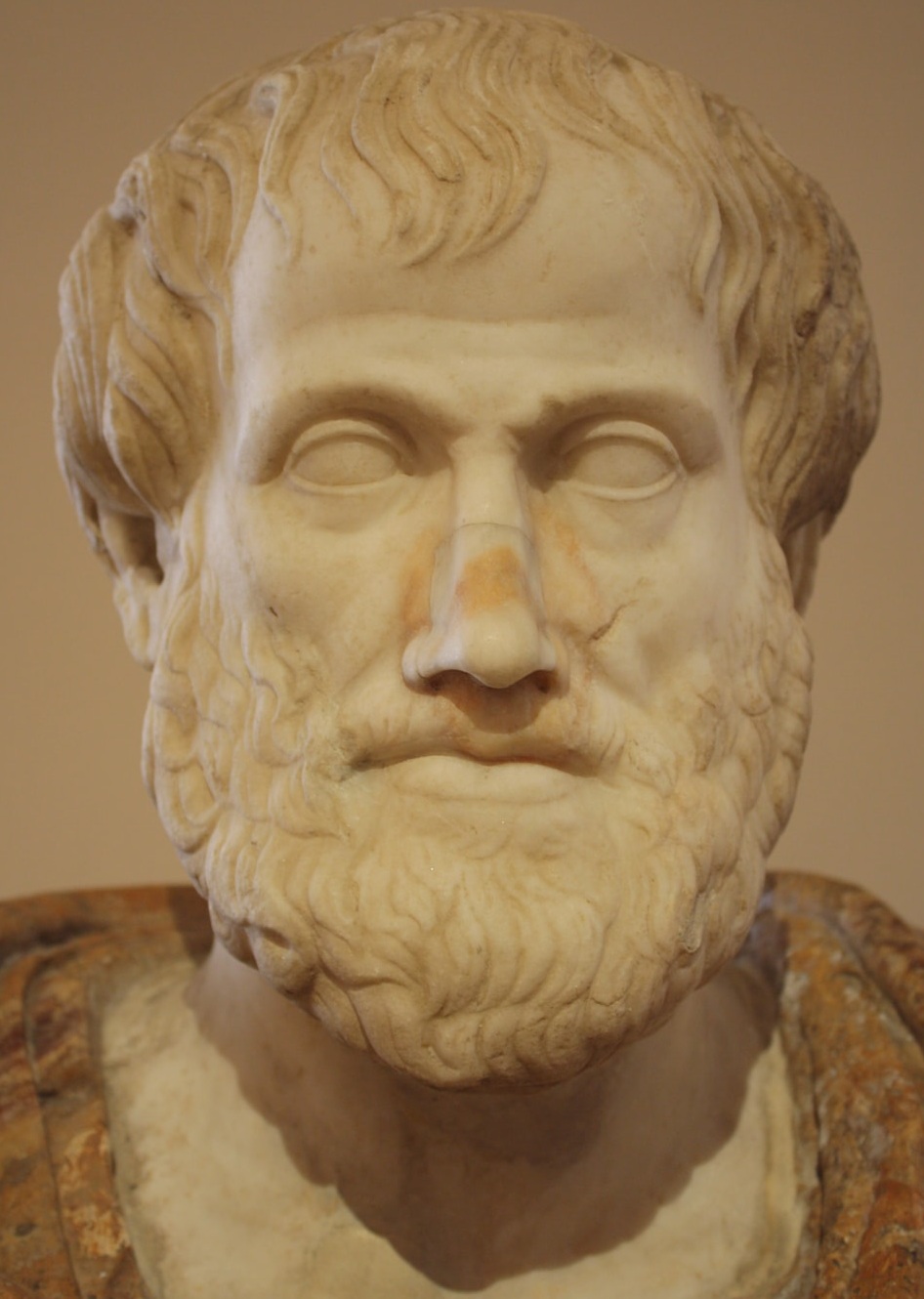
Exploring Happiness Through Aristotle’s Lens
Study of the Three Types of Life
Aristotle
identifies three major types of lives that people choose
in their pursuit of happiness: the life of pleasure, the
political life, and the philosophical life.
--The
Life of Pleasure (Gratification or Hedonism):
A life
devoted to physical enjoyment, bodily comforts, and
sensual satisfactions. It is a life of amusement.
--The
Political Life (Honor and Admiration):
A life
dedicated to the pursuit of power and public
acclaim. It is about gaining status and
building a reputation. It is dependent on the praise
of others.
--The
Philosophical Life (Study and Contemplation):
A life
focused on the exercise of the mind, learning, critical
thinking, and the pursuit of truth and wisdom. It is
about the use of reason and the quest for knowledge.
Cup of Zen
Ken Robinson: How to Find Your Passion
Denzel Washington: Fall Forward, Dream Big, Take
Chances, Change Your Life
Testing Your Beliefs
Tim Minchin: Live to Learn
Tips for Living More Mindfully
Baz Luhrmann: Everybody's Free (To Wear Sunscreen)
Steve Cuss: Four Spaces of Anxiety

Tips for Living More Mindfully
Intentionality in Our Daily Lives
--Perspective: Choosing how you see your life...
For mindfulness to be effective, it doesn’t really
matter how you view your life. But it can be useful to
acknowledge the general theme, because that way you can
be more alert to the tendency to slip into negative
patterns of thought. And it’s this increased awareness
that provides the potential for sustainable change.
--Communication: Relating to others... If
you want to find a greater sense of happiness through
the practice of mindfulness, you’ll need to notice that
taking out your frustrations on others is unlikely to
encourage a calm and clear mind. Communicating
skillfully and sensitively with other people is
therefore essential on the road to getting some
headspace. This could mean applying a greater sense of
restraint, empathy, or perspective to your
relationships—or maybe all three!
--Appreciation: Smelling the roses... Have
you ever noticed how much emphasis some people place on
even the smallest amount of difficulty in their lives,
and how little time they spend reflecting on moments of
happiness? Part of the reason for this is the idea that
happiness is somehow rightfully ours, and that
everything else is therefore wrong or out of place.




Steve Cuss: Reactivity and Anxiety
Broadway Kids Against Bullying: I Have a
Voice
Modern Love by Matt Nathanson
Zen Lesson: The Things We Carry
I
Just Want to Be OK: Ingrid Michaelson
Drive-By Compliments: You Look Great!
Chicks: Not Ready to Make Nice
--Kindness: Toward both yourself and others...
When you are kind to someone else, it feels good. It’s
not rocket science. It feels good to you and it feels
good to them. It makes for a very happy, peaceful mind.
But while you’re at it, how about showing yourself some
of that kindness, especially in the challenging process
of learning to be more mindful? We live in a world with
such high expectations that we can often be critical of
our own progress in learning something new.
--Compassion: In the shoes of others...
Compassion is not something that we can “do” or
“create”; it already exists in each and every one of us.
If you think of awareness as a clear blue sky, the same
image can be applied to compassion. In fact, you could
say that the blue sky represents both awareness and
compassion in equal measure. Compassion is a lot like
empathy—putting ourselves in the shoes of another and
experiencing a shared sense of understanding.
--Balance: A sense of equanimity... The ebb
and flow of life is not unlike the sea. Sure, sometimes
it’s calm and serene, but at other times the waves can
be so big that they threaten to overwhelm us. These
fluctuations are an inevitable part of life. But when
you forget this simple fact, it’s easy to get swept away
by strong waves of difficult emotions.


Dolly Parton Sings Let It Be
Tips for Living More Mindfully
Astronaut Christina Koch: We Are a Crew
True Colors by Cyndi Lauper
Train Passengers Sing Somewhere Over the
Rainbow
Dear Evan Hanson: You Will Be
Found
Zen Lesson: Things We Carry
Do You Hear the People Singing
Steve Cuss: NPR Interview | No Small Endeavor
--Acceptance: Resistance is futile... No
matter how fortunate your circumstances are, life can at
times be stressful and challenging. We often try to
ignore this fact and therefore feel frustrated and
disappointed when we don’t get our own way. Just as we
did when approaching compassion, it can be useful to
think back to the blue sky analogy when you reflect on
acceptance.
--Composure: Letting go of impatience... For
many people, life nowadays has become so busy, so
hectic, that an accompanying sense of impatience is
perhaps inevitable. In such moments, you may notice your
jaw tightening, your foot tapping, or your breath
getting increasingly shallow. But by noticing the
impatience with a genuine sense of curiosity, the very
nature of the impatience begins to change. Somehow the
momentum slows down and its grip is released.
--Dedication: Sticking with it...
Mindfulness is about a fundamental shift in the way you
relate to your thoughts and feelings. While that may
sound exciting, or perhaps a little overwhelming, it’s
actually brought about by repeating the exercise briefly
and often. So this means practicing meditation on a
regular basis, no matter how you feel. Just as when you
acquire any other skill, you’ll become more confident
and familiar with the feeling of mindfulness the more
often you apply it.
--Presence: Living life skillfully... Living
skillfully can mean having the presence of mind to
restrain yourself when you sense you are about to say or
do something you’ll later regret. It can also mean
having the strength and stability of awareness to
respond sensitively to difficult situations rather than
reacting impulsively. So living skillfully requires a
certain amount of discriminating wisdom.
[Source:
Andy Puddicombe, Get Some Headspace, 2012]
Zen
Philosophy
Daily Lessons for Life
Seven things you are carrying that you must drop...
1. The weight of yesterday's mistakes
2. Your need to be right
3. The search for a "why"
4. The mask of busy
5. Your script for other people
6. The "waiting for the day" mirage
7. Your resistance to bad moments
Seven people you need to stop helping...
1. The person who never tries
2. The person who complains about every solution
3. The person who takes your kindness for granted
4. The person who blames everyone else for their life
5. The person who only calls when they need something
6. The person who creates their own problems
7. The person who refuses to change
Seven
things you don't have to worry about...
1. The urge to explain yourself
2. The need for immediate closure
3. The habit of reacting instantly
4. The role of fixing people
5. The stories of the past
6. The demand that others understand you
7. The weight of believing every thought
Four
things to stop doing now if you truly value yourself...
1. Stop regretting the past
2. Stop worrying so much about the future
3. Stop looking for your happiness in other people
4. Stop doing too much for people who would not do the
same for you
Tips for Living More Mindfully
It
Gets Better: Broadway Stars
Lady Gaga: Beautiful Day in the
Neighborhood
Zen Stuff: Helping Others
This is What Respect Looks Like
Happy People Dancing
Around the World
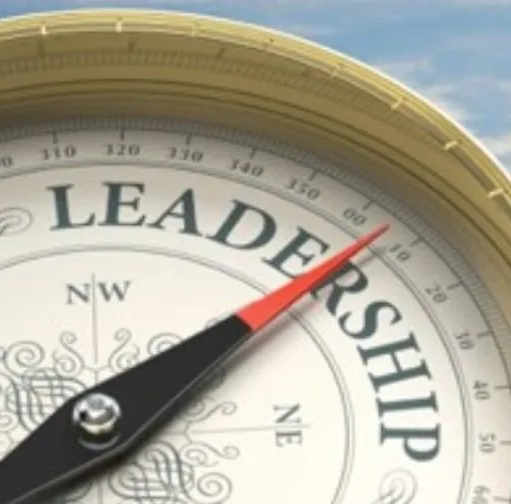
Philosophy
of Leadership
Principles
from Marcus Aureilius
Marcus
Aurelius's leadership philosophy, as gleaned from his
"Meditations," emphasizes self-control, understanding
human nature, and acting with justice and compassion.
Here are his key principles:
--Understand that people exist to help one another.
Marcus believed in the interconnectedness of humanity
and the importance of acting for the common good.
--Be mindful of others' humanity. Recognize that
everyone is striving and making mistakes, and approach
interactions with empathy and understanding.
--Realize that many mistakes are the result of
ignorance. Avoid quick judgments and try to understand
the motivations behind others' actions.
--Do not overly exalt yourself. Maintain humility and
avoid arrogance, as true leadership lies in service, not
dominance.

--Avoid quick judgments of others' actions. Instead,
seek to understand the situation and the person's
perspective before drawing conclusions.
--Recognize that others can hurt you only if you let
them. Focus on your own actions and reactions, and don't
allow external negativity to define you.
--Know that pessimism can easily overtake you. Be
mindful of negative thoughts and emotions and work to
maintain a positive outlook, even in the face of
adversity.
--Practice kindness. Sincere kindness is a powerful tool
for building relationships and resolving conflict.
--Do not expect bad people to exempt you from their
destructive ways. Be prepared for challenges and don't
allow the actions of others to derail your path.
--Lead by example. Aurelius emphasized the importance of
demonstrating the qualities of a good leader through
actions rather than just words.
I Want to See You Be Brave
Everybody Wants to Be Loved by Ingrid Michaelson
Rachel Platten: This is My Fight Song
Honoring Difference: You Are a Masterpiece
Levels
of Awareness
Types and Stages
Human Consciousness
Humans go through stages of psychological development
and awareness. The level of consciousness from which a
person operates determines what they can see and
understand.
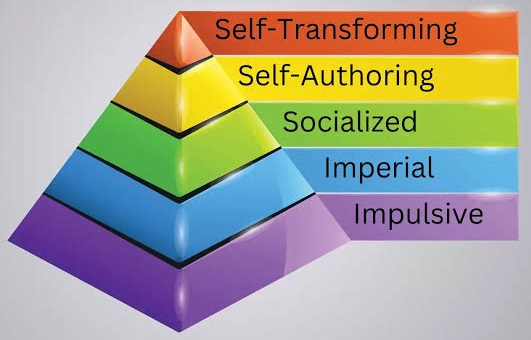
Robert Kegan Model
The natural stages (or lower levels) of development are
about physiological growth. Maturity allows people
to advance to the higher level social and psychological
stages.
--Impulsive Mind (Early Childhood)
--Imperial or Instrumental Mind (Adolescence)
--Socialized Mind (Adults)
--Self-Authoring Mind (Mature Adults)
In the Socialized Mind stage, a person's identity is
almost entirely defined by the groups they belong to.
They think they are thinking their own thoughts, but
those thoughts were given to them by family, culture,
religion, and media. In this stage, a person is unable
to consider a perspective that threatens that threatens
their group's worldview.
In the Self-Authoring Mind (or Self-Transforming Mind)
stage, a person has the capacity to step back from the
inherited belief systems and consciously choose which
ones they genuinely support.
They are able to...
--disagree with their tribe
--update their worldview based on evidence
--be wrong and not collapse
--hold several perspectives simultaneously, see the
limitations of each, and navigate between them with
genuine flexibility
[Source:
Celastrina Calea]
Maslow's Hierarchy of Needs
Steve Cuss: Reactivity and Anxiety
Celastrina Calea: Levels of Awareness
Jay Shetty: How is Your Time Spent?
Katie Joy: Four Levels of Consciousness
Simon Sinek: Life Advice That Will Change
Your Future
Seven Habits of Highly Effective People
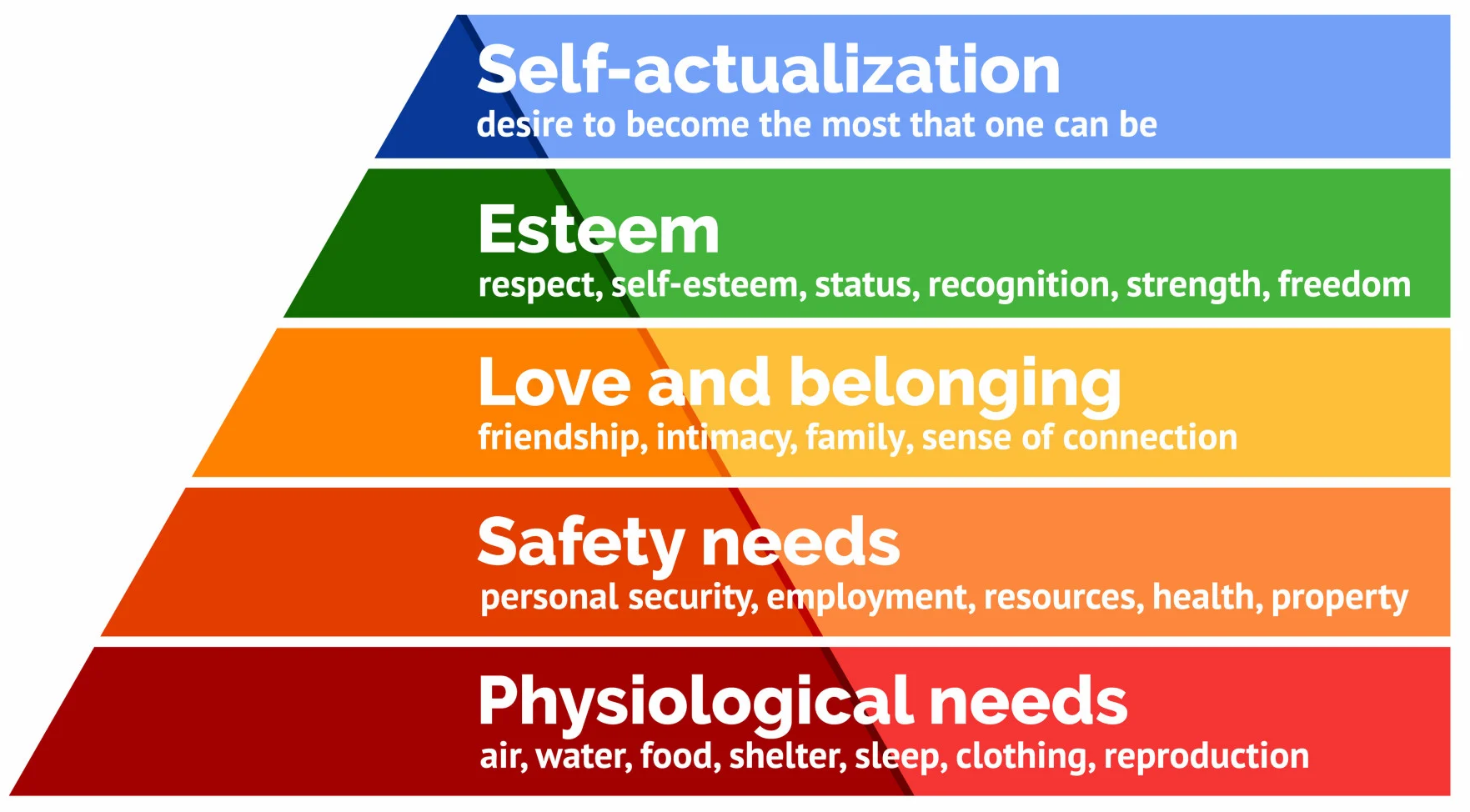
Abraham Maslow Model
Maslow's Hierarchy of Needs demonstrates the levels of
growth, development, and maturity based on one's needs,
how they are met, and what provides motivation to ascend
to the next level.
--Physiological Needs - Food, Shelter
--Safety and Security Needs - Health, Resources,
Employment
--Social and Emotional Needs - Love, Belonging, Family,
Community, Connection
--Self-Esteem Needs - Respect, Status, Recognition,
Autonomy
--Self-Actualization - Purpose, Meaning, Potential,
Creativity
At the Self-Actualization level, a person desires to
expand their mind, broaden their perspective, make the
most of their life, and serve others.
[Source:
Abraham Maslow, Theory of Needs and Motivation]
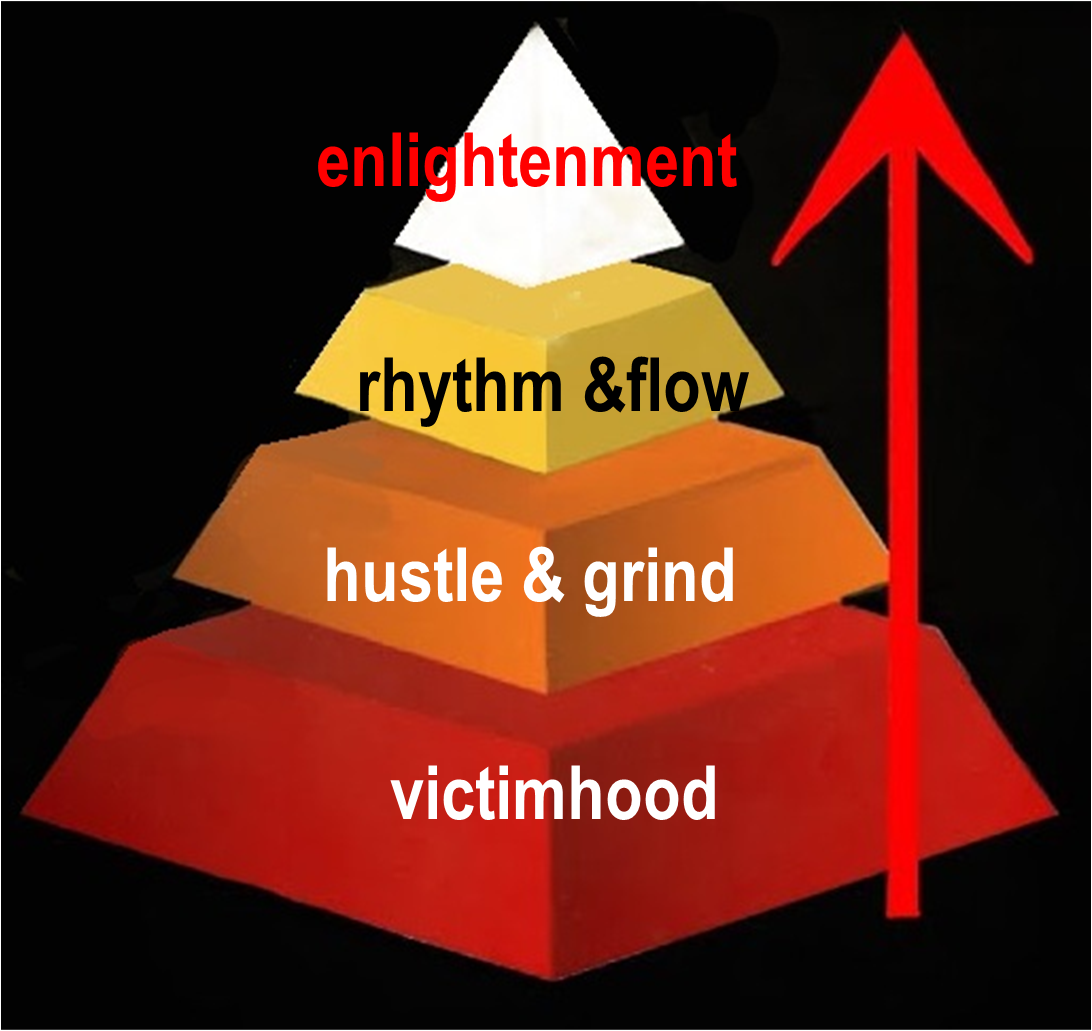
Four
Levels of Consciousness
The first two levels are driven by ego and fear. The two
higher levels are inspired by trust and love.
1. Victimhood - Life happens to me (social conditioning,
programming, lack of control, blaming, complaining)
2. Hustle and Grind - Life happens by me
(responsibility, awakening, questioning, learning)
3. Rhythm and Flow - Life happens through me
(remembering, reprogramming, revising, surrendering)
4. Enlightenment - Life happens as me
(self-actualization, knowingness, oneness, unity)
[Source: Katie Joy, Global Butterfly]
Maslow's Hierarchy of Needs
Steve Cuss: Reactivity and Anxiety
Celastrina Calea: Levels of Awareness
Jay Shetty: How is Your Time Spent?
Katie Joy: Four Levels of Consciousness
Simon Sinek: Life Advice That Will Change
Your Future
Seven Habits of Highly Effective People

The
Importance of Resilience in Leadership
Thrive in Times of Change
In the ever-evolving landscape of today's world, the
need for resilient leadership has become not just
important but integral to the success and
sustainability. Leaders who can navigate challenges,
adapt to change, and lead their teams with resilience
are essential assets in today's dynamic and
unpredictable environment.
What is resilient leadership? Resilient leadership
involves the ability to navigate the pressures of modern
working life effectively. According to research,
resilient leaders possess key characteristics that set
them apart...

Adaptability
In a world where change is constant, resilient leaders
demonstrate an unparalleled ability to adapt. They view
change as an opportunity for growth rather than a
threat, steering their teams through uncertainties with
a forward-looking perspective.
Emotional Intelligence
Resilient leaders possess a high degree of emotional
intelligence, enabling them to understand and manage
both their own emotions and those of others. This
heightened emotional awareness fosters effective
communication, enhances collaboration, and builds strong
relationships.
Decision-Making Under Pressure
The hallmark of resilient leaders lies in their
capability to make sound decisions even in high-pressure
situations. By staying calm, focused, and decisive, they
contribute to group stability and inspire confidence
among team members.
Maslow's Hierarchy of Needs
Steve Cuss: Reactivity and Anxiety
Celastrina Calea: Levels of Awareness
Jay Shetty: How is Your Time Spent?
Katie Joy: Four Levels of Consciousness
Simon Sinek: Life Advice That Will Change
Your Future
Seven Habits of Highly Effective People

Your
Unique Personality
Embracing Your Personal Type
Psychological researchers have identified four aspects
of personality. Within these four aspects, there is a
range of expression that will vary from person to
person. There is no right or wrong personality. We are
all different. We should be proud of who we are
and respect the personality of those who are different.
As a tool
for self-understanding, these personality descriptors
not only help us learn more about ourselves, but also
allow us to appreciate the unique traits of other
people. By being aware of our particular psychological
type, we can adjust our personality based on the people
and situations we encounter and choose the right
approach.
My
Personality: Discover Your True Self
Diversity: Different But the Same
Sixteen Personality Types
Explaining Personality Types
Your Type and What it Means
Interacting With Others and Restoring Energy...
--[E]
Extrovert - Outgoing, talkative, fast-paced,
multitasking, variety, interacts with groups, relates to
audiences, public-oriented, prefers activity, restores
energy by sustained interaction with people
--[I]
Introvert - Inwardly, reserved, slow-paced, one task at
a time, stability, interacts with individuals, one on
one, private-oriented, prefers solitude, restores energy
from alone-time
Communicating and Understanding Information...
--[S]
Sensing - Realistic, practical, tangible, concrete
facts, black-and-white, details, step-by-step, literal,
processes and interprets information in a linear and
rigid manner
--[N]
Intuiting - Imaginative, abstract concepts, open-minded,
gray areas, big picture, contextual, interpretive,
processes and interprets information in a flexible and
situational manner
Making Decisions and Solving Problems...
--[T]
Thinker - Brain-based, rational, logical, rules,
evidence, consistency, completion, firm, objective,
task-oriented, goal-oriented
--[F]
Feeler - Heart-based, adaptable, empathetic,
circumstances, consideration, open-ended, flexible,
subjective, relationship-oriented, people-oriented
Organizing Your Lifestyle...
--[J]
Judging - Orderly, organized, structured, disciplined,
formal, controlling, planning, schedules, lists,
precise, strict
--[P]
Perceiving - Casual, spontaneous, unstructured,
informal, relaxed, laid-back, easy-going, go with the
flow, inexact, adaptable, lenient
My
Personality: Discover Your True Self
Diversity: Different But the Same
Sixteen Personality Types
Explaining Personality Types
Your Type and What it Means
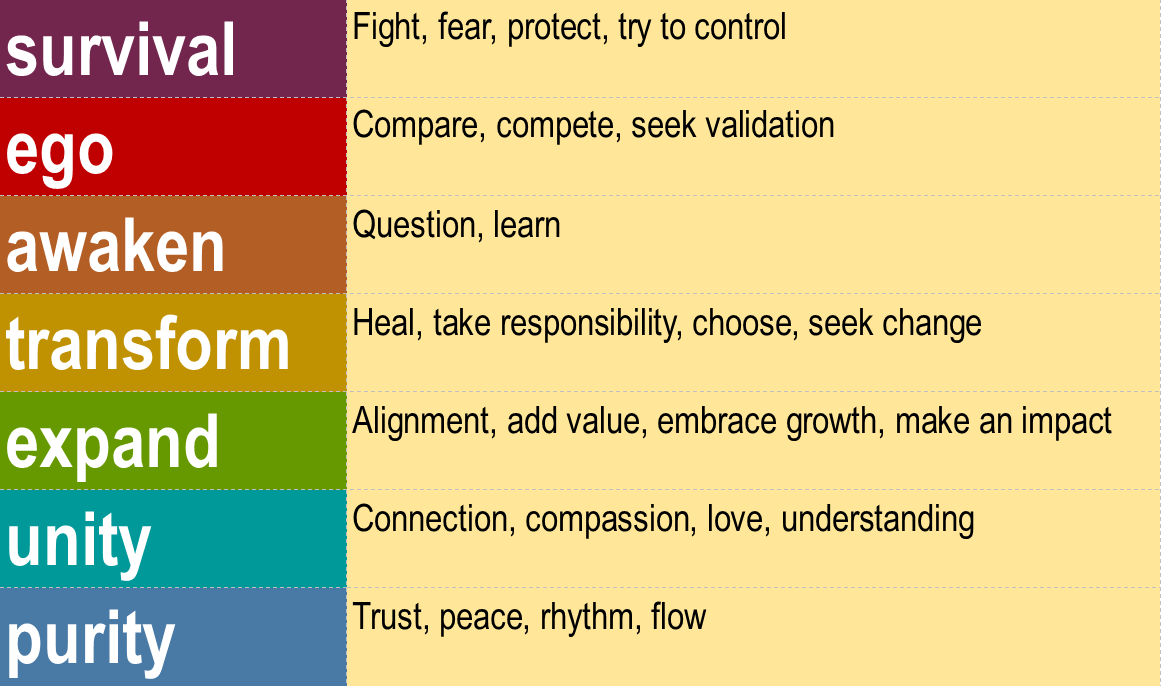
Levels
of Personal Growth
Consciousness, Maturity, Awareness
Most people talk about consciousness like it’s some
place you get to… like one day you arrive and everything
just clicks. That hasn’t been my experience at all. It
moves. It shifts. It deepens… and some days it feels
like you’re right back where you started.
At the lower levels, life feels tight. Heavy. You’re
reacting to everything. Trying to control outcomes,
prove your worth, defend your position. It’s not because
something’s wrong with you… it’s because you’re
operating from survival. And when you’re there,
everything feels like it’s happening to you.
Then something starts to change. You catch yourself in
it. Maybe not every time… but enough to notice. You see
your reactions as they’re happening. You start
questioning things you used to just accept. And
honestly… this part can feel the hardest. Because now
you’re aware, but you haven’t fully shifted yet. You
can’t go back to sleep, but you’re not fully grounded in
something new either. That in-between space… it’ll test
you.
As you keep going, you stop blaming everything outside
of you. Not in a forceful way… it just becomes clear.
You start realizing how much your internal state shapes
your reality. Your reactions slow down. You don’t need
to prove as much. You’re not chasing the same things
anymore because something deeper in you feels steady.
Then presence starts to take over. Not perfectly… but
more consistently. You’re not stuck in your head all
day. You can actually sit in a moment without needing to
escape it. Emotions still come up… they always will… but
they don’t run the show like they used to. There’s space
now. And that space changes everything.
And when you go even deeper… something shifts in how you
experience life itself. Things start to feel connected.
Your intuition gets stronger. Timing feels different.
Conversations land differently. You’re not just thinking
your way through life anymore… you’re feeling your way
through it too.

But here’s the truth most people don’t say… You don’t
just “reach” a level and stay there. You can be grounded
one moment and triggered the next. Clear in the morning…
reactive by the afternoon. That doesn’t mean you’re
going backwards. It means you’re moving through layers
that have been there a long time.
The real
shift isn’t about staying high all the time. It’s about
catching it faster. Coming back quicker. Not letting
yourself get pulled all the way back into something
you’ve already outgrown.
That’s the work. Not being perfect… just being aware.
Not escaping life… actually being in it. Not trying to
become someone else… but remembering who you already are
underneath all of it. And the deeper you go… the less
noise there is.
[Source: Zachary Fisher, Way of Being Foundation]
Dolly Parton Sings Let It Be
Astronaut Christina Koch: We Are a Crew
True Colors by Cyndi Lauper
Steve Cuss: Reactivity and Anxiety
4 Non Blondes - What's Going On
Train Passengers Sing Somewhere Over the
Rainbow
Do You Hear the People Singing

NATIONAL CRISIS |
SOCIAL
JUSTICE |
SHARED
HUMANITY | REAL
PATRIOTISM
CHURCH
AND STATE | POPULAR
CULTURE | LIFE LESSONS
|